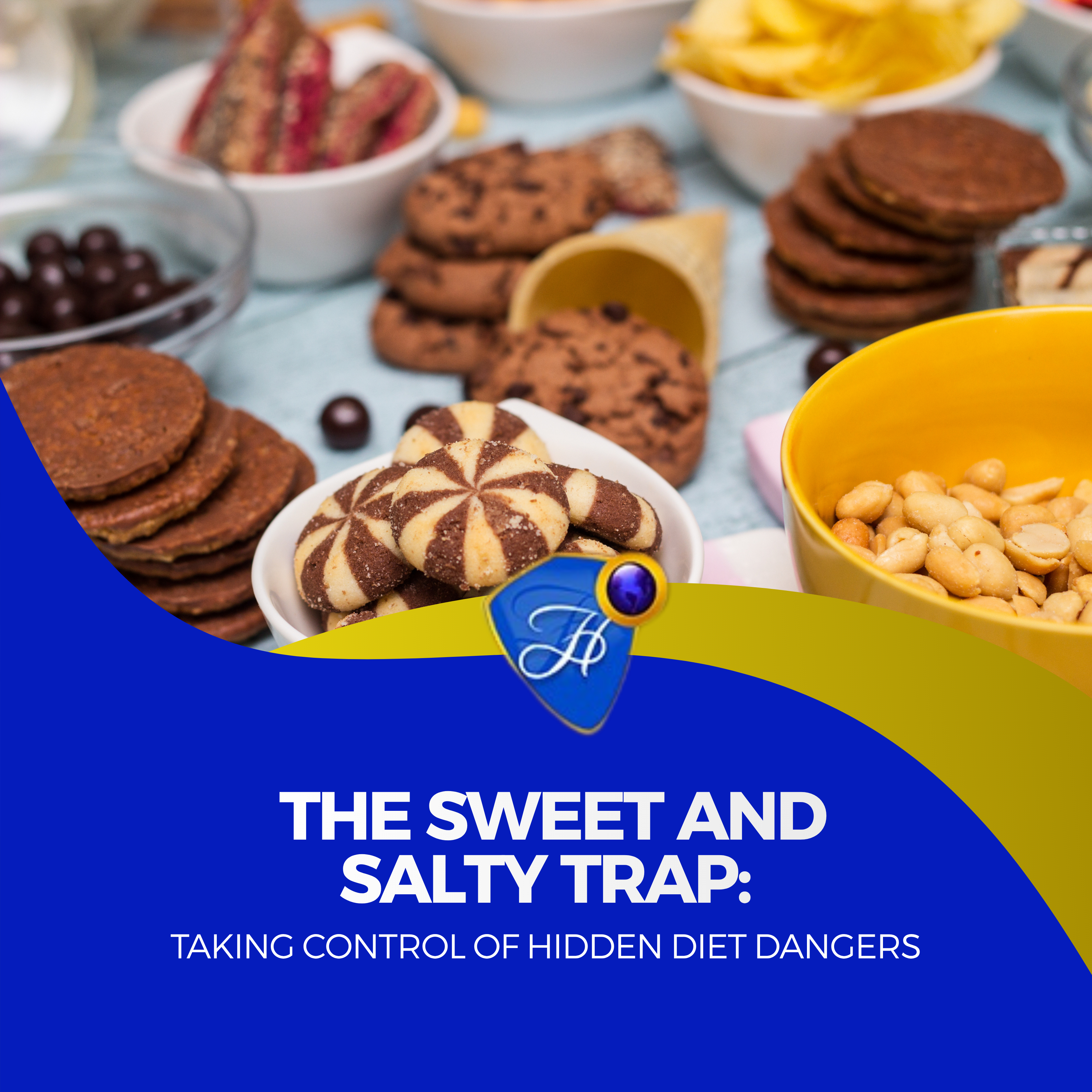



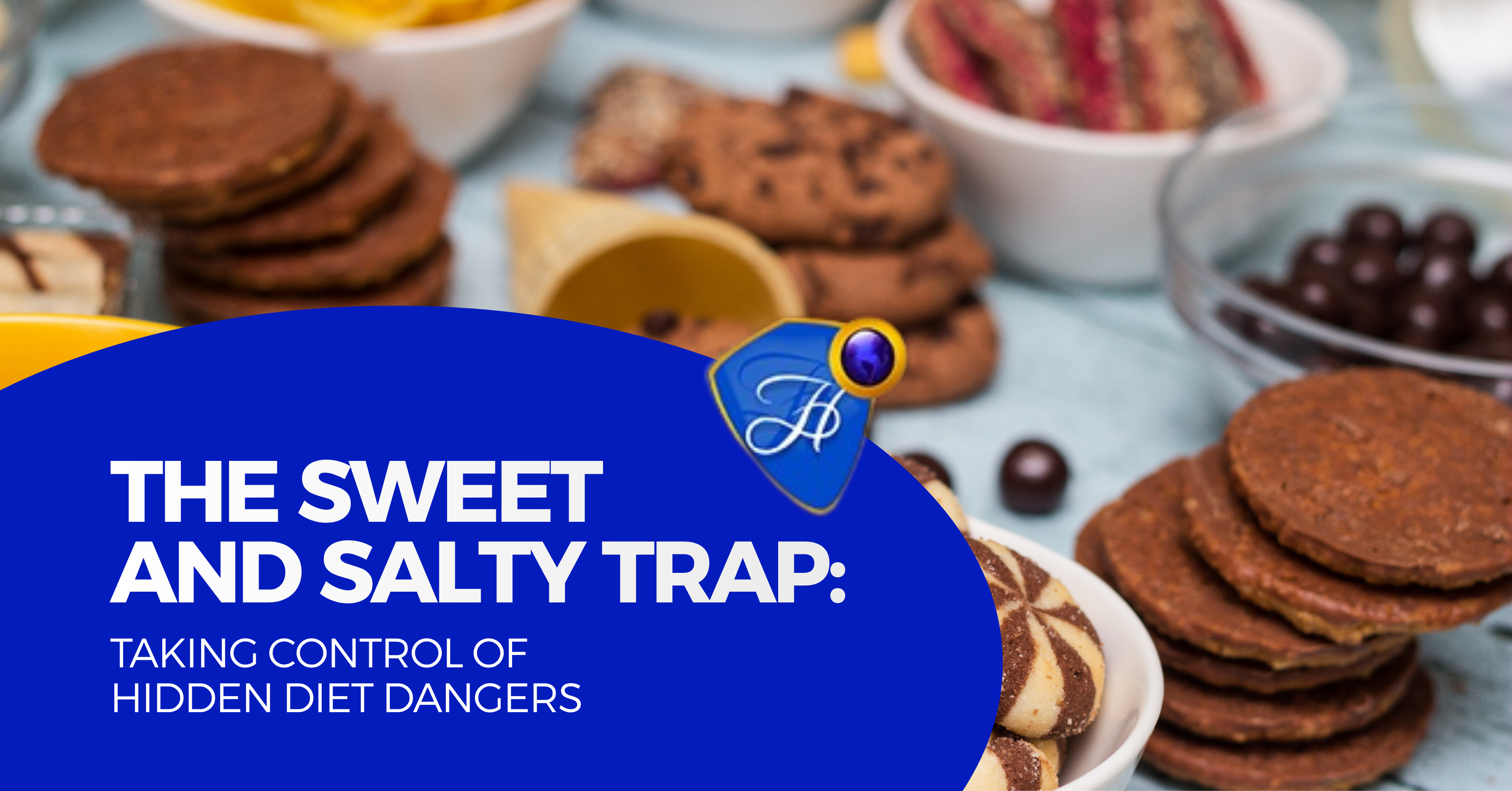
THE SWEET AND SALTY TRAP: TAKING CONTROL OF HIDDEN DIETARY DANGERS
In today’s fast-paced world, convenience often shapes what we eat. Packaged snacks, takeout meals, and even seemingly “healthy” options can quietly load our diets with excess sugar and sodium. While these ingredients enhance flavor and shelf life, they also pose significant long-term health risks when consumed in large amounts. The real danger? Much of it is hidden in plain sight.
HOW SUGAR SNEAKS IN
Sugar isn’t just in obvious treats like cakes, candies, and soft drinks. It lurks in products marketed as healthy—yogurts, granola bars, breakfast cereals, fruit juices, and even salad dressings. Manufacturers often use different names for sugar, such as glucose, fructose, corn syrup, maltose, and dextrose, making it harder to identify.
Excess sugar intake is strongly linked to weight gain, insulin resistance, and chronic conditions like type 2 diabetes and heart disease. It can also contribute to energy crashes, cravings, and poor dental health. Because liquid sugars (like those in sodas and juices) don’t make you feel full, they can lead to consuming far more calories than intended.
THE SILENT SALT OVERLOAD
Salt, or sodium, is essential in small amounts, but modern diets often contain far more than needed. Processed foods—instant noodles, canned soups, chips, processed meats, and fast food—are among the biggest culprits.
Too much sodium increases the risk of high blood pressure, which can lead to heart disease and stroke. What makes salt especially tricky is that many savory foods don’t taste “overly salty,” yet still contain high levels. Even bread, sauces, and condiments can contribute significantly to daily sodium intake.
WHY IT’S HARD TO CUT BACK
Sugar and salt aren’t just flavor enhancers—they’re engineered to make foods more appealing and even addictive. They trigger pleasure responses in the brain, encouraging repeated consumption. Over time, your taste buds adapt, making natural foods seem bland in comparison.
This creates a cycle: the more you consume, the more you crave.
HOW TO TAKE BACK CONTROL
Breaking free from hidden sugar and salt doesn’t require extreme dieting. It starts with awareness and small, consistent changes:
Read labels carefully: Check for added sugars and sodium content. Shorter ingredient lists are usually better.
Cook more at home: Preparing meals yourself gives you full control over what goes in.
Choose whole foods: Fresh fruits, vegetables, grains, and lean proteins are naturally low in added sugar and salt.
Limit processed foods: The less packaged a food is, the less likely it is to contain hidden additives.
Retrain your taste buds: Gradually reducing sugar and salt helps your palate adjust, making natural flavors more enjoyable.
Be mindful of drinks: Replace sugary beverages with water, herbal teas, or unsweetened options.
A HEALTHIER BALANCE
Sugar and salt aren’t enemies—they’re part of a balanced diet when used in moderation. The problem lies in overconsumption, often without realizing it. By becoming more conscious of what you eat and making intentional choices, you can avoid the sweet and salty trap.
Your long-term health depends not just on what you eat occasionally, but on what you consume every day. Small adjustments today can lead to a healthier, more energetic future.