


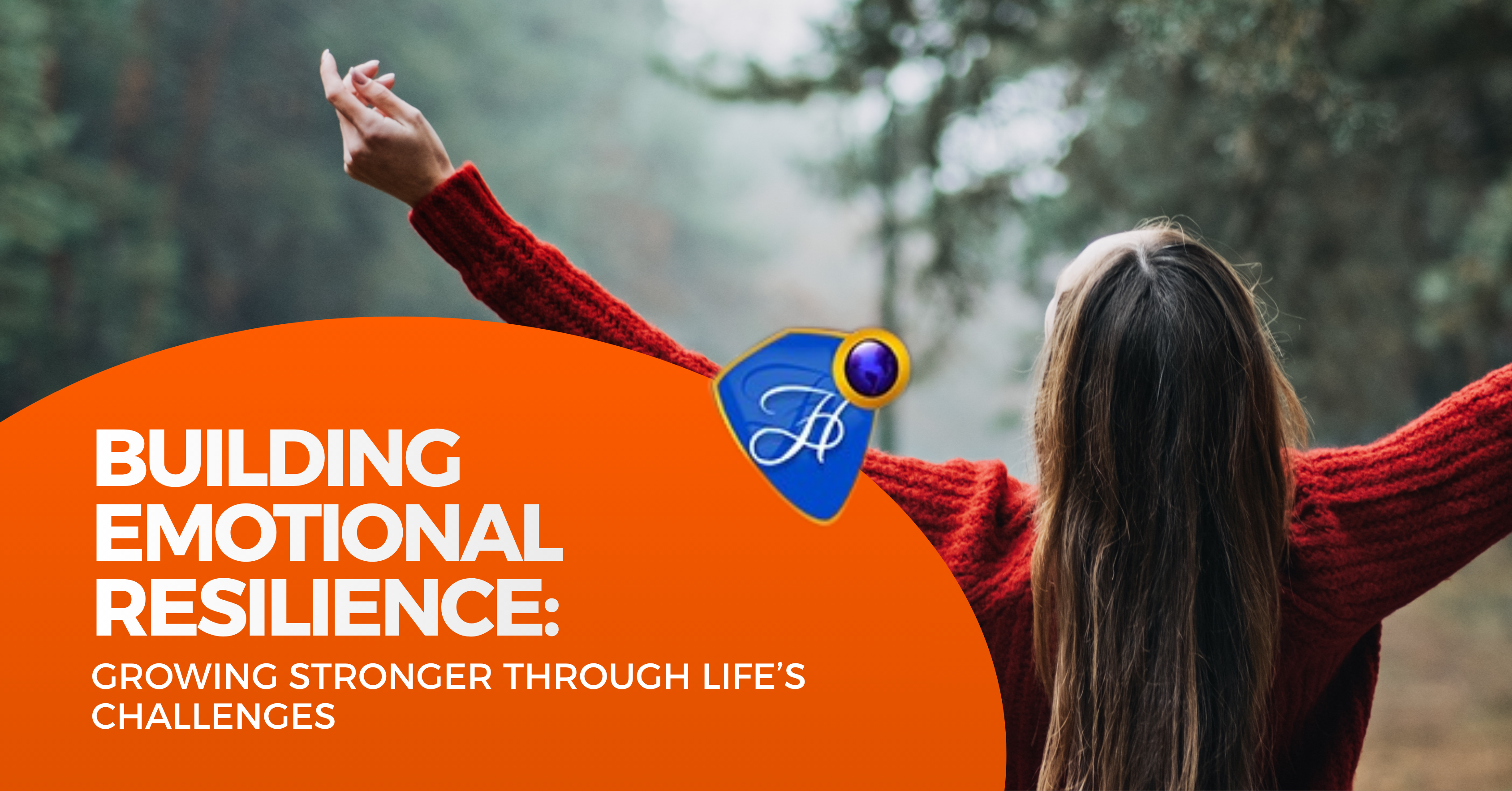
BUILDING EMOTIONAL RESILIENCE: GROWING STRONGER THROUGH LIFE’S CHALLENGES
Life does not always go according to plan. Unexpected changes, disappointments, pressure, loss, conflict, and uncertainty are experiences we may all encounter. While we cannot always control what happens around us, we can develop the inner strength to respond to life’s challenges in healthier and more constructive ways. This inner strength is known as emotional resilience.
Emotional resilience does not mean pretending that everything is fine or refusing to experience difficult emotions. Rather, it is the ability to acknowledge challenges, process emotions appropriately, adapt to change, and continue moving forward with hope and perspective. The good news is that resilience is not simply something you either have or do not have. It can be developed.
UNDERSTANDING EMOTIONAL RESILIENCE
Emotional resilience is the capacity to cope with stressful or difficult situations without allowing them to completely overwhelm you. A resilient person can experience disappointment, fear, sadness, frustration, or uncertainty while still finding healthy ways to respond.
Resilience does not make life problem-free. Instead, it equips you to face problems without allowing them to define your entire outlook. Think of it like a muscle: the more intentionally you develop healthy emotional habits, the better equipped you become to handle challenges.
WAYS TO HANDLE EMOTIONAL CHALLENGES
1. LEARN TO RECOGNIZE YOUR EMOTIONS
You cannot manage what you refuse to acknowledge. When something difficult happens, take a moment to identify what you are actually feeling. Are you angry? Overwhelmed? Disappointed? Afraid? Lonely? Frustrated? Putting a name to an emotion can help you understand what is happening internally instead of reacting impulsively.
However, recognizing your emotions does not mean allowing them to control your decisions. You can acknowledge how you feel while still choosing how you respond. Instead of saying, “I shouldn't feel this way,” try asking, “What is this feeling telling me, and what is the healthiest way to respond?”
2. DEVELOP HEALTHY WAYS TO MANAGE STRESS
Stress is part of life, but chronic or poorly managed stress can affect your emotional and physical well-being. Healthy stress-management practices can include:
- Getting adequate rest
- Staying physically active
- Eating balanced meals
- Spending time outdoors
- Practising relaxation or breathing exercises
- Taking regular breaks from demanding activities
- Organizing tasks and setting realistic priorities
- Making time for hobbies and activities you enjoy
You do not have to completely eliminate stress to live well. The goal is to develop healthy ways of responding to it. Sometimes, resilience looks less like doing more and more like knowing when to pause.
- Getting adequate rest
3. CHALLENGE NEGATIVE THINKING
Difficult situations can easily influence the way we think. One setback can become, “Everything is going wrong.” One mistake can become, “I can never do anything right.” That is where perspective becomes important. When you notice an unhelpful thought, pause and examine it. Ask: Is this thought based on facts or fear? Am I focusing only on what went wrong? What can I learn from this situation? What is within my control right now?
A positive mindset does not mean ignoring reality. It means refusing to let a difficult moment convince you that there is no possibility of a better one.
4. FOCUS ON WHAT YOU CAN CONTROL
One of the fastest ways to become emotionally overwhelmed is to spend all your energy trying to control things that are outside your control. You may not control what another person says, how someone behaves, unexpected circumstances, or what has already happened.
But you can often control your response, your choices, your attitude, your boundaries, and the next step you take. When life feels chaotic, ask yourself: “What can I do about this today?” Then focus your energy there.
Small, intentional actions can restore a sense of direction when everything feels uncertain.
BUILD RESILIENCE ONE DAY AT A TIME
Emotional resilience is not developed overnight. It is built through everyday choices: how you respond to stress, how you speak to yourself, the relationships you maintain, the boundaries you establish, the habits you practise, and the perspective you choose. Life will still have difficult moments. Resilience simply means you become better equipped to navigate them.
So, when the next challenge comes, remember: you do not have to have everything figured out at once. Take a breath. Acknowledge what you feel. Focus on what you can control. Reach out when you need support. Learn from the experience. Then take the next healthy step forward.