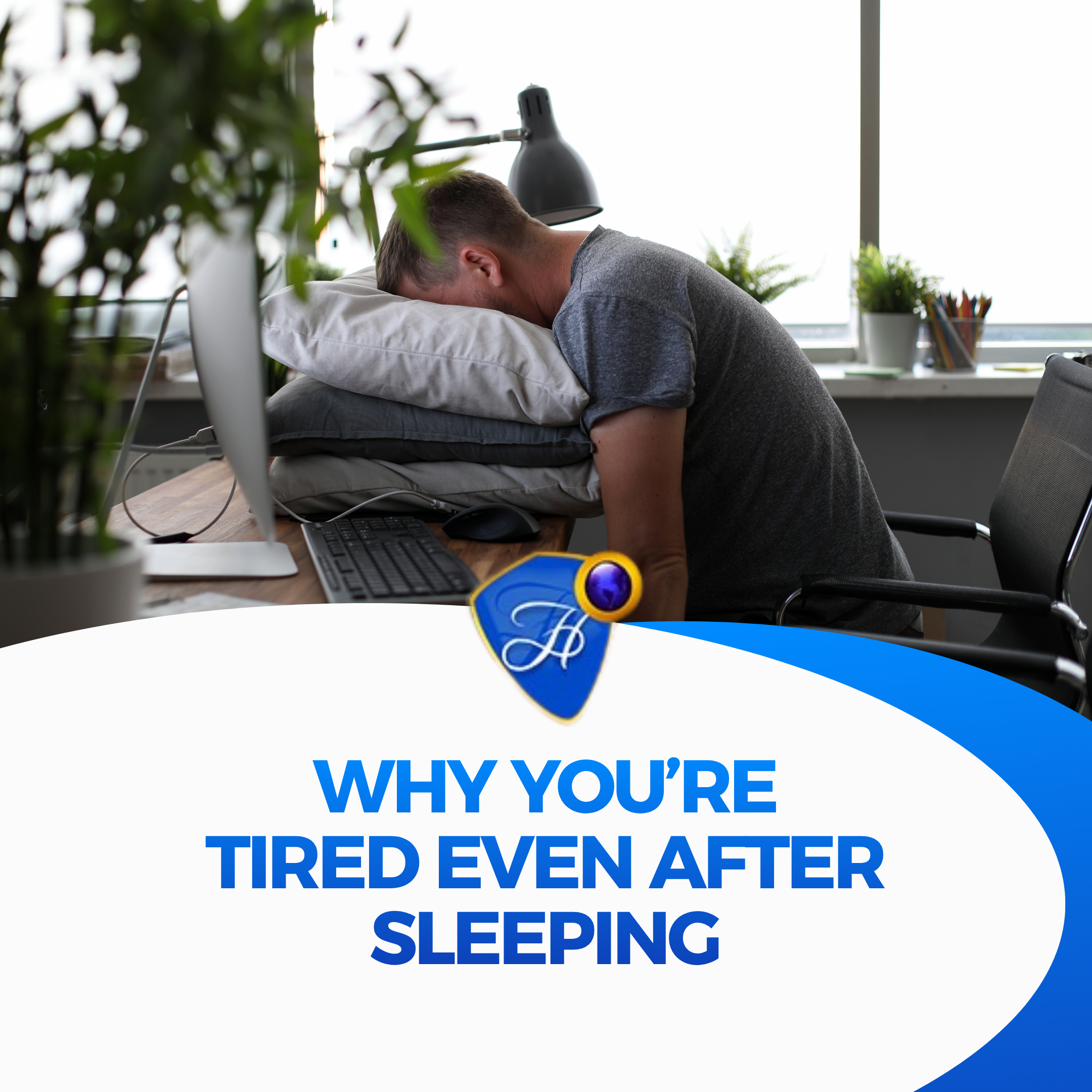



WHY YOU’RE TIRED EVEN AFTER SLEEPING
You got what should have been a full night of sleep. You went to bed at a reasonable time, woke up hours later, and yet you still feel exhausted. Sound familiar?
Feeling tired after sleeping can be frustrating, especially when you believe you’re getting enough hours of rest. But sleep isn’t only about how long you sleep. The quality of your sleep, your daily habits, stress levels, diet, activity, and even your sleeping environment can all influence how refreshed you feel in the morning.
Here are some common lifestyle factors that may be leaving you tired—even after a seemingly good night’s sleep.
1. YOU’RE SLEEPING, BUT NOT SLEEPING WELL
Eight hours in bed doesn’t necessarily mean eight hours of restorative sleep. You may wake briefly throughout the night without remembering it, or your sleep may be disrupted by noise, temperature, an uncomfortable mattress, light, or other environmental factors. Late meals, caffeine, alcohol, and an inconsistent bedtime can also affect sleep quality.
If you regularly wake up feeling as though you barely slept, consider focusing on sleep quality rather than simply counting hours. Try keeping your bedroom cool, dark, and quiet, and establish a relaxing wind-down routine before bed.
2. STRESS MAY BE KEEPING YOUR BRAIN AWAKE
You might be physically asleep while your mind is still working overtime. Work deadlines, financial worries, relationships, family responsibilities, and everyday pressures can make it difficult to fully relax. Stress can interfere with falling asleep and may also contribute to restless or fragmented sleep.
If your mind tends to race at night, create a short transition period before bed. Put away work, write down tomorrow’s tasks, practice slow breathing, read something calming, or simply give yourself a few quiet minutes without stimulation. Your bedtime routine should signal to your brain: the day is over.
3. TOO MUCH SCREEN TIME BEFORE BED
Scrolling through social media, watching videos, answering messages, or working on a laptop right before bed can keep you mentally stimulated. Light from electronic screens can also affect the body's natural sleep signals, particularly when exposure is close to bedtime.
You don't necessarily have to eliminate technology completely. Instead, try creating a screen-free wind-down period before sleeping. Even 30–60 minutes can give your mind a chance to slow down.
4. YOUR DIET MAY BE AFFECTING YOUR ENERGY
What you eat during the day can influence how energetic—or drained—you feel. A diet dominated by highly processed foods and added sugars may contribute to fluctuations in energy. Skipping meals can also leave you feeling depleted, while very heavy meals close to bedtime may interfere with comfortable sleep.
Aim for balanced meals containing protein, fiber-rich carbohydrates, healthy fats, fruits, and vegetables. And remember to drink enough water throughout the day. Sometimes what feels like tiredness is partly dehydration or inadequate nutrition.
WHEN TIREDNESS SHOULDN’T BE IGNORED
Lifestyle factors are common contributors to tiredness, but persistent fatigue isn't always a lifestyle problem. If you continue feeling unusually tired despite getting adequate sleep and improving your habits—or if tiredness is affecting your daily life—it may be worth speaking with a healthcare professional. Ongoing fatigue can sometimes be associated with sleep disorders or other underlying health issues.
The goal isn't to simply “push through” exhaustion. It's to understand why you're feeling that way.
THE BOTTOM LINE
Feeling tired after sleeping doesn't necessarily mean you need to sleep for more hours. Sometimes, the problem is how you're sleeping and what you're doing during the hours you're awake. Start by looking at the basics: maintain a consistent sleep schedule, manage stress, reduce late-night screen use, eat balanced meals, stay active, and create a comfortable sleeping environment. Small changes can add up. And if you've made healthy adjustments but still feel persistently exhausted, don't dismiss it. Your body may be telling you that something deserves a closer look.
Good sleep isn't just about closing your eyes for eight hours. It's about giving your body and mind the conditions they need to truly recover.